
Showing posts with label Ethnic Humor. Show all posts
Showing posts with label Ethnic Humor. Show all posts
Friday, September 02, 2011
Yoshua Okon's Octopus
From Hammer Museum: We were invited behind-the-scenes at the shoot for Yoshua Okon's latest video Octopus. The piece, shot on location at a Los Angeles Home Depot store, explores the relationships among Guatemalan day laborers who at home fought on opposite sides of the Guatemalan civil war, yet here in the U.S. are working side-by-side in their efforts to find employment. The work was produced during Okon's residency with the Hammer. He explains more about the work in this video. (Run time: 8 minutes)
From Humor As Art: YOSHUA OKON talks about the HUMOR in his art piece OCTOPUS. This is a rare view into how an artist constructively uses HUMOR in art to convey messages. But not only that to stir up other emotions outside of laughter. FANTASTIC!!!!

Wednesday, July 06, 2011
Disaster Jokes du Jour by Christie Davies
Disaster Jokes du Jour
by Christie Davies
April 04, 2011
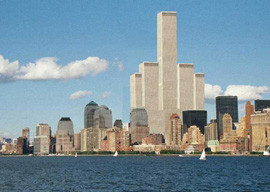
Japan’s recent combined earthquake, tsunami, and nuclear-reactor disaster has led to the usual spate of jokes across the globe. In the modern world such jokes are universal and appear very quickly after disasters, threats of disease, and celebrity deaths. There were jokes after the space-shuttle crash, 9/11, Princess Diana’s death, and after Ted Kennedy killed Mary Jo Kopechne. There are jokes about serial killers, airplane accidents, swine flu, AIDS, and terrorism. Jokes often get recycled from one disaster to another. The latest outburst can draw on the earlier wave of Indonesian tsunami jokes, previous bons mots about earthquakes in Mexico and New Zealand, and old one-liners about the Chernobyl nuclear disaster.
In circulation right now:
Why did the Japanese bloke fall off his bike? He was hit by a whale.It is not entirely surprising that celebrities telling such tasteless jokes in public have been censured. What is stupid is that the politically correct seek a world where such jokes do not exist. Just as stupid are their attempts to explain the very existence of each new joke cycle in terms of the presumably sinister motives, feelings, and personalities of the individual joke-tellers. Today the jokes are said to express hostility to the Japanese. But did the wave of space-shuttle jokes after the Challenger crash express hostility to astronauts? Are the current Australian jokes about New Zealand’s recent earthquake an expression of hostility to a close neighbor?
Today an elderly Japanese couple asked me to take a picture of them. When I said “Wave,” they ran like hell.
Give a Japanese man a fish, and he will eat for a day. Give a Japanese man a net, and he may find his family.
“What is stupid is that the politically correct seek a world where such jokes do not exist.”Apple are releasing a new device in Japan: the iPaddle.
BBC News Headline: America is to send two nuclear experts to Japan. The last time the Americans sent two teams of nuclear experts to Japan, they killed 135,000 people.
Can we start making jokes, or is it too tsunami?
More Kiwis (New Zealanders) have been buried alive than at any time since Gallipoli.At the time of the space-shuttle jokes, it was claimed that they were circulated among a small group of unfunny, callous, and warped individuals. Yet the jokes spread all over America and to other countries. There is no independent evidence that these people were anything other than ordinary citizens who in their everyday lives were caring and helpful to others.
Why aren’t New Zealanders upset at their earthquake? Because all the sheep are vibrating.
Another explanation was that the jokes were a response to a fear of danger. True, those in dangerous occupations such as soldiers and police officers frequently resort to “gallows” humor. But unless you ride in a space vehicle, why would you and the other joke-tellers be anxious?
When Princess Diana died in a Parisian car accident with her Muslim paramour Dodi Al-Fayed, British liberal media pundits called the resulting jokes a coping mechanism, a way of dealing with grief. But while some in Britain wailed, keened, and came close to rending their garments at Lady Di’s death, later surveys showed that most people were indifferent to yet another simple casualty of French drunken driving. They had no need to “cope,” a word whose usage insults the grief of those who actually have to persist after the death of a family member or close friend. Why should anyone care deeply about Diana—a mere picture on the television? Besides, the jokes were worldwide. I found Diana jokes on the Internet in French, German, and Spanish that depended on wordplay in those languages. Others used distinctively American and Australian forms of English, and many appeared in English on Dutch and Danish websites. It was a great international joke-fest. Those who invented, told, and circulated these jokes did not seem distressed by her demise.
Did you hear that Diana had blue eyes? Yep, one blew out the left window and the other out the right window.Sick jokes involving sex, ethnicity, blasphemy, aggression, and politics liberate us momentarily from an irksome verbal constraint. They amuse because they sneak around the social rules that stifle how we speak. Sick jokes have always been with us, but disaster jokes date only from the latter part of the twentieth century and the advent of TV news programs that try to fool us into thinking we are present at the disaster scene and ought to experience the same anguish that those on the spot are feeling. This is a lie whose message is rendered incongruous by what follows—advertising jingles and banal quiz shows. Such incongruity leads to jokes. The television liberals have invented a new language cage for ordinary folks to use when speaking of distant disasters. In doing so they have called into being a new species of sick joke: the disaster joke. Unlike natural disasters, this new mess is entirely manmade.
What do Lady Di and Pink Floyd have in common? Their last big hit was The Wall.
Lady Di finally lived up to her name.
http://takimag.com/article/disaster_jokes_du_jour/print
Sunday, January 03, 2010
Ethnic Humor Overview
It's somewhat of a controversial thought but I believe in ethnic humor. I believe (get this) it can actually bring harmony to racial tensions. Ethnic humor is everywhere across this globe. Humans love to make "the other side of the camp" feel humiliated and inferiors. It's part of being. What's interesting is the reasons why certain people make fun of other certain people. There's anthropological, historical, societal reasons why many jokes are told about others. A great book: Ethnic Humor Around the World talks about all of these things in depth categorizing it through regions.
I also stumbled upon this today:List of Ethnic Slurs
That's right, an alphabetized list of many ethnic slurs, and their historical context.
In my opinion a must have for any aspiring humorist. OR artist.
I also stumbled upon this today:List of Ethnic Slurs
That's right, an alphabetized list of many ethnic slurs, and their historical context.
In my opinion a must have for any aspiring humorist. OR artist.
Sunday, September 27, 2009
A Post from my iPhone
During preperation for a child's two year birthday party, my girlfriend was icing the cupcakes; traditional vanilla and chocolate became a deeper meaning in my hum(an)(or) subconscious.

A Wrong Turn in Harlem
I quickly titled it to catogorize the photograph as Humor in Art.
- Posted from my iPhone
Thursday, June 04, 2009
Oh, Dem Watermelons by Robert Nelson
From UBUWEB
Watermelons was commissioned by the San Francisco Mime Troupe as a short entertainment to be screened during intermission for its rather infamous 1965 Minstrel Show (Civil Rights from the Cracker Barrel), which assaulted racial stereotypes by wildly exaggerating them -- as performed by (mostly white) performers in blackface, yet. A relative latecomer to filmmaking, the 35-year-old Nelson had just begun fooling around with the medium, mostly in collaboration with then-wife Gunvor Nelson. To make Watermelons he drafted talent from the Mime Troupe and alma mater Mills College, where he'd also found a young composer named Steve Reich, later known (to his occasional annoyance) as the father of minimalism, and thus the person to be blessed or blamed for subsequent fellow travelers Philip Glass and John Adams.
Reich's raucously repetitive choral arrangement of a Stephen Foster oldie (in which a slave mourns his deceased master) adds another satirical dimension to the color visuals, which direct the campus era's mood of anarchy and impudence toward the watermelon. Aiming to explode stereotypes and their symbols, the film finds melons used as bombs, footballs, baseballs, shooting targets, even as sensuous love objects. Watermelons are cut-and-pasted onto existing images (from Superman to a NASA missle) and sometimes animated there, à la Terry Gilliam's Monty Python 'toons. Fruits are chased by white male hordes, then turn around (via the magic of reverse projection) to chase them in return."
Tuesday, February 24, 2009
Best Oscar Speech
It sucks when you make a joke then no one gets it. It happened to Kunio Kato when he won the Oscar for his animated film. Or - they didn't want to offend his accent.
Tuesday, April 15, 2008
Inciting Humor
 In regards to the Jews developing humor in German Culture, refer to the book Inciting Laughter by Jefferson
S. Chase.
I haven't read it. It's on my "to read" list.

Monday, April 14, 2008
Addressing the Germans
 This website reaches a lot of the intellectual
community. One of those communities is
called Germany. Recently, I have had numerous
hits from numerous towns in the great country
of Germany.
I always wish to show my appreciation for anyting
that deserves my appreciation. I felt this warrants
that appreciation. Here is a video addressing the
German population that has found interest in the
research done here.
Saturday, February 16, 2008
Danzig's Book Collection (J.O'B ReMake)


James A. O'Brien gives us a tour of his high profile book collection.
Thursday, January 10, 2008
The Blue Noses Group-Americanizer

From: Art of Russia
In the art of the group "Blue Noses" are embodied the innovatory trends of Russian modern art – the communicatory and the comical. The artists work in zones, borderline for the aesthetic and social response, and with the most poignant problem for these zones and the general social state. The art of "Blue Noses", as a worldview, tends sooner to the Rabelais-like simple-hearted clear thinking, than to social criticism. Frequently their works represent video-documentation of some absurd and hilarious actions, performed by the artists as improvisations based on pre-prepared roles. The works of "Blue Noses" elegantly balance on the edge of the everyday and artistic phenomenon, reminding one of a half-professional, half-amateur video, where the intended fiasco is indistinguishable from a dilettante blunder. The model of the world of the "petty man" is affirmed through parody in diverse ways of ridiculing the fetishes of mass consciousness. "Blue Noses" mockingly imitate the high art of the XXth century, mass culture, television, glamour, the joy of leisure, the spectacle of sport, the sacred rituals of everyday life etc. The whole existential state of the petty man appears in their works in an energetic, sympathetically-idiotic manner.
Alexander EVANGELY
Subscribe to:
Posts (Atom)


 Posts
Posts


